By Santhosh Sebastian, DGS AISBIEA
‘Human Resources (HR)’ is one of the vital functions of any organisation. It is the tool which aligns the performance of its work force with the goals of the organisation. Finding & retaining suitable talent, placing them at right opportunities and fostering a positive workplace atmosphere which enhances productivity are the important functions of HR. At the same time, the HR is also responsible for the motivation and well-being of its employees. In short, smooth functioning of HR of any organisation is all about striking a balance between the organisational goals and the employee aspirations.
Through their interventions in recruitment, training, promotion, placement, welfare & conflict resolution, the HR operatives contribute directly to overall efficiency, productivity & success of the organisation. They are also largely responsible for encouraging open communication, promoting constant dialogue and providing as well as receiving feedback from employees, which all create an environment where the staff feel valued & considered. Regular bilateral engagement is the key in understanding goals and building trust between management and employees. The HR team has also an important role in ensuring compliance with labour laws and regulations as well as maintaining cordial industrial relations. In simpler terms, ensuring operational efficiency & keeping the employee morale high are the fundamentals of the HR function.
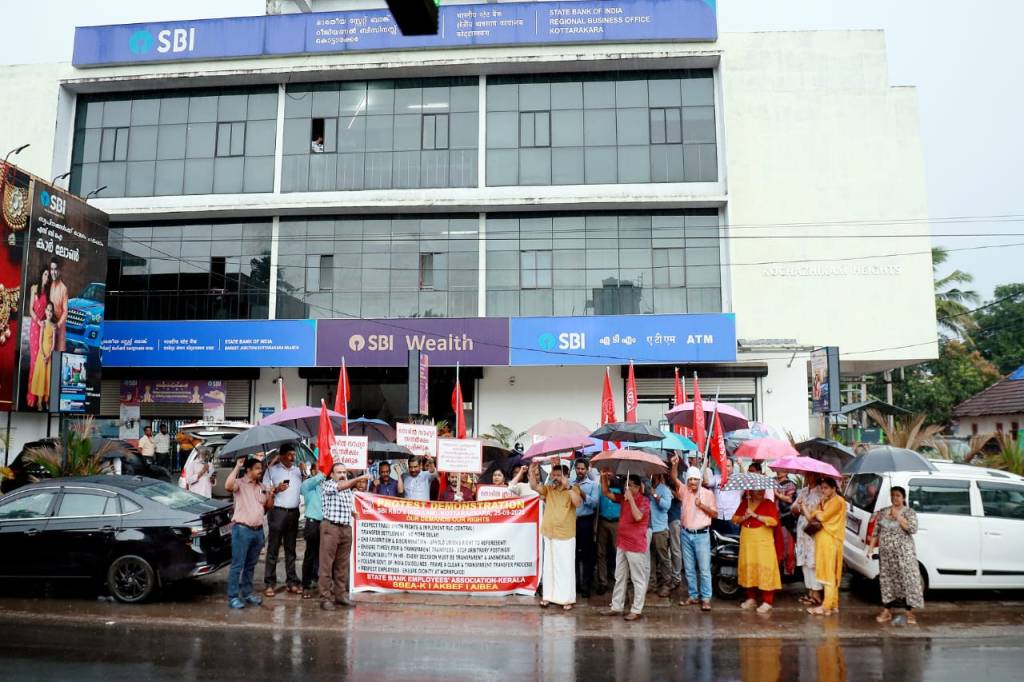
In this background, the recent campaign and agitational actions, our Kerala Circle Union has initiated has raised many eyebrows. Though the circumstances which forced the Union to such an action has been explained in the previous circulars, many questions are still being raised. While some well-wishers are warning us about the risk of irking the HR set up altogether, some others have serious concerns about the reputational loss such a campaign can make to the Bank.
We reiterate that it was not our intention to brand all HR functionaries as partisan, nepotistic or corrupt. There are many efficient, empathetic, impartial and professional HR functionaries with high degree of proven integrity. But our intention is surely to point out the weakness in the system and the loopholes existing in the existing set up, which facilitate such weaknesses. And also, to expose the ‘extraneous influences’, piggy riding on our HR system for their petty benefits. In the process, these ‘parasitic forces’, are inflicting irreparable damage to our HR culture.
The support our campaign received from unexpected corners proved our intentions right. Most employees believe that the HR practices of our Bank need a systemic revamp. Findings of the ’employee engagement programs’ conducted by the management in the past amply support this argument. Across cadres & different geographical regions and irrespective of organisational affiliations, the work force believes that the system needs to be fairer and transparent.
Quality employee engagement and space for collective bargaining are even more important in the Bank, as we are part of an industry where all service conditions, wages and allied matters are decided through bilateral discussions. Thanks to decades of struggles by AlBEA, our industry is following the best practices of collective bargaining such as bipartite settlements. Arbitrariness and authoritarian approaches do not go along with the true spirit of collective bargaining. And at a time when the ‘work-life balance’ is the hottest topic, inclusive HR approaches are inevitable.
Some are of the view that our HR culture has its roots in the colonial culture, where masters & slaves existed. The notorious ‘Kangani labor system’ which promoted indentured servitude was an important aspect of colonial labour practices. The ‘Kanganis’, who acted as middlemen, were very successful in masquerading as messiah of the workers, but at the same time, connived with the masters to facilitate boundless exploitation. They managed this through effectively misguiding the hapless workers that they are standing for their welfare. The quid pro quo arrangement was convenient for both the masters and the kanganis. Such legacies are no longer acceptable in a Public Sector Unit, which is the industry leader, trend setter and who is supposed to be a model employer.
Many colleagues point out that we do have very robust policies and guidelines governing various HR functions such as transfers. They are right. But the problem lies in the implementation of these policies. Unless these policies are not supported by efficient and transparent tools for implementation, there are serious chances of sabotage.
Individual traits of HR managers, such as their Impartiality adaptability. communication skills and empathy directly affect the implementation of policies. HR professionals with strong ethical standards fosters a trusting atmosphere and harmonious workplace. They make righteous decisions, especially in conflict resolution, leading to fair treatment for all employees. Nothing stops from being empathetic to genuine needs of employees.
Sense of fairness is crucial for HR managers to build trust and make objective decisions. Without it, HR risks losing credibility, leading to poor decision-making, legal issues, reduced productivity, lower employee morale and potential industrial unrest. When employees perceive their HR as fair and unbiased, they are more likely to trust the department, feel heard and engage in good faith, leading to easier conflict resolution.
The most unfortunate scenario is where the HR functionary is incompetent, he is in captivity of certain groups and being remote- controlled in his actions. Bias & discrimination will be the hallmark of their decision making and we can’t expect any equitable treatment under their ‘rule’. The labour laws have very stringent provisions on such blatant unfair practices by officials, which provides for action including prosecution. It is not very difficult to prove their unfair intent with the available data of manipulations they carry out throughout the year.
Absence of clearly laid down processes & objective criteria for granting higher compensation or positions to equally placed employees also propel corrupt practices & nepotistic considerations. It is an undisputable fact that corrupt practices and nepotistic tendencies have creeped into the transfer process. It has created a toxic atmosphere, a clear divide and animosity amongst the workforce. The Bank has a zero-tolerance policy on bribery and corruption, in which the HR functions are also covered.
These unfair practices negate meritocracy and place unfit or unqualified persons in key positions. This issue is clearly visible in the postings of cash in charges at branches, who are supposed to contribute heavily towards the Gold Loan business. Senior employees drawing higher allowances by virtue of their permanent designations are kept out of their designated roles and junior employees are drafted to temporary allowance carrying positions. Apart from losses on the business front, it also inflicts additional wage cost to the Bank.
Web based and technology enabled solutions can bring greater amount of transparency in to the HR process. Treated fairly is the right of every individual. The campaign and struggles for transparent processes and dignified approaches are aimed at improving the job satisfaction, motivation and productivity. This will lead to a contented workforce, performance excellence and take us towards our overall goal of building a resilient organization with great values for the generations to come.
